
Key Takeaways
- TRICARE covers alcohol and drug rehab when treatment is medically or psychologically necessary
- Detox, inpatient care, partial hospitalization, intensive outpatient and medication-assisted treatment are all on TRICARE’s covered list
- Planned detox and residential stays need pre-authorization; emergencies do not
- Your plan sets the steps: active duty, Prime, Select and TRICARE For Life each have their own rules
- Family members are covered under their own plan, and TRICARE For Life follows Medicare first
If you or someone in your family has TRICARE and drinking or drug use has become a problem, the first practical question is usually about coverage. Will TRICARE pay for treatment? In most cases, yes. The details depend on which TRICARE plan you have, whether you are on active duty, and what kind of care you need.
This guide walks through TRICARE rehab coverage for alcohol and drug treatment, detox, residential care, family members and TRICARE For Life, along with the referral and authorization steps each plan expects before care starts. It is written for service members, retirees and military families anywhere in the country.
TRICARE Rehab Coverage at a Glance
Yes. TRICARE covers substance use disorder treatment when it is medically or psychologically necessary. That includes detox, inpatient care, partial hospitalization, intensive outpatient programs and medication-assisted treatment.[1][2]
These are the substance use disorder services TRICARE lists as covered[1]:
- Inpatient care, emergency and nonemergency
- Management of withdrawal symptoms (detox)
- Partial hospitalization programs
- Intensive outpatient programs
- Medication-assisted treatment
- Opioid treatment programs
- Office-based opioid treatment
- Mental health therapeutic services
TRICARE covers services that are medically necessary and considered proven. Aversion therapy and unproven treatments are not covered[1]. Coverage is the starting point, not the whole answer. Each plan has its own rules about referrals and pre-authorization, and active duty service members have rules of their own.
Does TRICARE Cover Alcohol Rehab?
Yes. Alcohol use disorder is a substance use disorder, so alcohol rehab falls under the same TRICARE benefit as drug rehab. When treatment is medically necessary, TRICARE can cover each stage of it, from detox through outpatient care.[1][2]
What changes from person to person is the level of care. After a long stretch of heavy drinking, stopping suddenly can set off withdrawal that is painful and can be life threatening, so medical help with the first days matters[3]. Someone else may be able to start in an intensive outpatient program while living at home. A clinical assessment decides which level fits.
If drinking started as part of military life and grew after it, our article on alcohol in the military and after service covers the signs of an alcohol use disorder and why so many veterans drink to cope.
Does TRICARE Cover Drug Rehab and Detox?
Yes. TRICARE covers drug rehab the same way it covers alcohol rehab: when treatment is medically necessary. Its list of covered services includes management of withdrawal symptoms, which is what most people mean by detox, along with opioid treatment programs, office-based opioid treatment and medication-assisted treatment.[1]
If you are looking for detox centers that accept TRICARE, two rules are worth knowing before you call. In an emergency, you do not need a referral or pre-authorization. Go to the nearest emergency room. If you are admitted, you or someone helping you should let your primary care manager or regional contractor know within 24 hours or by the next business day[4].
A planned detox admission works differently. Nonemergency substance use disorder care from a facility outside a military hospital or clinic needs pre-authorization[4], so confirm that the authorization is in place before admission day.
Detox is the first step, not the whole treatment. Withdrawal care treats the body. The habits, stress and thinking under the drinking or drug use still need treatment afterward, which is why a good detox plan includes what happens next. Our page on medical detox explains what supervised withdrawal involves.
TRICARE Approved Residential Treatment for Substance Use
This is where many families get confused. TRICARE has a residential treatment center benefit, but it is for a different group. It covers psychiatric residential treatment for people under 21, it requires a primary diagnosis other than a substance use disorder, and it needs pre-authorization[5].
Residential rehab for a substance use disorder is handled separately. It falls under TRICARE's inpatient substance use disorder coverage[1] and is provided by what TRICARE calls substance use disorder rehabilitation facilities[6]. Because it is nonemergency care from an institutional provider, it needs pre-authorization from your regional contractor before admission[4].
So when you look for TRICARE approved residential treatment for drinking or drug use, three questions do most of the work. Is the program a TRICARE authorized substance use disorder facility? Is it in network for your plan and region? Will it help request the pre-authorization? Our residential treatment page explains what a residential stay involves.
The steps after residential care are covered too. TRICARE covers partial hospitalization programs for substance use disorders and does not require pre-authorization for them[7]. It also covers intensive outpatient programs for people who do not need full-time hospital care, including people stepping down from inpatient, residential or partial hospitalization care. Ask your regional contractor whether your intensive outpatient program needs pre-authorization[8].
TRICARE Prime vs Select: Referrals and Authorization for Substance Use Treatment
Your plan decides how much paperwork comes before treatment. This is what each one asks for when the care is for a substance use disorder (SUD)[6].
Active duty
Including activated Guard and Reserve
- Where to start
- Military hospital or clinic, if possible
- Civilian care
- Referral and pre-authorization
- Who arranges it
- Your primary care manager
TRICARE Prime
Family members, retirees and others
- Outpatient SUD therapy
- Referral needed
- Inpatient or residential
- Referral and pre-authorization
- Out of network
- Point-of-service fees without a referral
TRICARE Select
Family members, retirees and others
- Outpatient SUD therapy
- Referral needed at an SUD facility
- Inpatient or residential
- Pre-authorization
- Providers
- Any TRICARE-authorized provider
TRICARE For Life
TRICARE eligible with Medicare A and B
- Who pays first
- Medicare
- Whose rules
- Medicare's, until those benefits run out
- Outpatient SUD therapy
- Referral and authorization
TRICARE Prime is managed care. You have a primary care manager, or PCM, who handles most of your care and works with your regional contractor on referrals and authorizations[9]. Most outpatient mental health visits with a network provider need no referral, but outpatient therapy for a substance use disorder does. A hospital stay needs both a referral and pre-authorization. If you see a non-network provider without a referral, you pay point-of-service fees[6].
TRICARE Select is a self-managed plan. You can book with any TRICARE authorized provider, and most appointments need no referral[10]. For substance use treatment, you still need a referral for outpatient therapy from a substance use disorder rehabilitation facility, and pre-authorization for inpatient care[6].
TRICARE Substance Abuse Treatment for Active Duty Service Members
Active duty service members, including activated National Guard and Reserve members, are enrolled in TRICARE Prime and cannot use TRICARE Select[9][10]. TRICARE asks them to get their mental health care at a military hospital or clinic when possible. Civilian care takes a referral and pre-authorization, and your PCM coordinates both[4][6].
For many service members, the paperwork is not the hardest part. The worry is what asking for help will do to a career. Half of military personnel have said they believe seeking help for a mental health issue would hurt their military career[11], so if you feel that way, you are far from alone. On active duty, the usual first step is your PCM or the behavioral health clinic at your military hospital or clinic.
Does TRICARE Cover Rehab for Dependents?
Yes. TRICARE substance use disorder coverage applies to covered family members, not only to the service member. Active duty family members can be enrolled in TRICARE Prime or TRICARE Select, and so can retirees and their families.[9][10]
Family members follow the rules of their own plan, not the active duty rules. A spouse in TRICARE Select, for example, needs a referral for outpatient therapy from a substance use disorder rehabilitation facility and pre-authorization for inpatient care, but no referral for most other appointments[6][10]. TRICARE Young Adult Select follows the same mental health appointment rules as TRICARE Select[6]. For dependents under 21 with a primary mental health diagnosis, the residential treatment center benefit may also apply[5].
Family members often make the first call. You can ask what treatment would look like, and what your plan covers, before your loved one has agreed to anything.
Does TRICARE For Life Cover Rehab?
Yes, but Medicare comes first. TRICARE For Life is Medicare wraparound coverage for people who are TRICARE eligible and have Medicare Part A and Part B. Medicare pays its share of a claim first, and TRICARE For Life then pays for services TRICARE covers.[12]
That order shapes TRICARE For Life rehab coverage. You follow Medicare's rules for mental health and substance use care until those Medicare benefits are used up, and you still need a referral and authorization for outpatient therapy from a substance use disorder rehabilitation facility[2][6]. When you compare programs, ask about Medicare as well as TRICARE For Life.
At Virtue, TRICARE For Life is not one of the plans in network at our Killeen facility. Admissions can still look at your benefits with you and talk through your options.
TRICARE, TriWest and VA Benefits: Which One Applies?
TRICARE and VA health care are separate programs. Many military retirees qualify for both and can get care under either one. The two do not coordinate benefits, and once you start a course of treatment under one program, you stay with that program until that episode of care ends[13].
The name TriWest adds to the confusion. TriWest Healthcare Alliance is the TRICARE West Region contractor[14]. It is also one of the companies VA uses to run its community care network, in VA regions 4 and 5[15]. One company, two programs. If you are using TRICARE, your coverage is TRICARE. If you are using VA health care, TriWest is the route for VA approved community care.
Veterans using VA benefits go through VA community care. Virtue accepts TriWest for VA community care at our Killeen, Houston, Las Vegas and Astoria, Oregon facilities. Our TriWest page explains how that works, and our guide does the VA pay for rehab covers how to ask your VA for a community care referral.
How to Check Your TRICARE Coverage Before Rehab
A few checks before admission save most of the surprises later.
-
Confirm your plan and region.
Your plan decides the rules. TRICARE has two U.S. regions, and since January 1, 2025, Arkansas, Illinois, Louisiana, Oklahoma, Texas and Wisconsin have been part of the West Region. You can check your region by ZIP code on TRICARE’s West Region page. Regions do not apply to TRICARE For Life.[14][16][17]
-
Ask about referrals.
On active duty or in TRICARE Prime, start with your primary care manager. In TRICARE Select, check whether the care you want needs a referral.[6]
-
Check the facility.
Ask whether the program is TRICARE authorized, whether it is in network for your plan and region, and which levels of care it offers.
-
Get the authorization in place.
For a planned detox or residential stay, pre-authorization comes before admission. Ask the facility to help with the request.[4]
-
Ask for a benefits check.
Virtue offers free, confidential benefits verification, so you can see what your plan covers before you decide anything.
Verify your insurance →
Using TRICARE at Virtue Recovery Center in Killeen
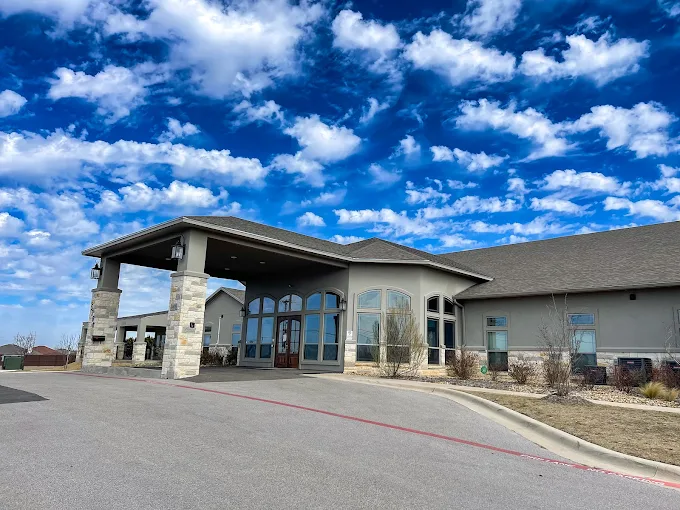
TRICARE West Prime and Select are in network at our Killeen, Texas facility, about 15 minutes from Fort Hood. Killeen is the only Virtue location where TRICARE is in network. It offers medical detox, residential treatment, partial hospitalization and intensive outpatient care.
Killeen is also home to Warriors Path, our veteran program, built by Dr. Rajesh Harripersad, a retired U.S. Army combat veteran and the author of this guide.

If your plan is TRICARE East, admissions will verify what applies to you before anything is arranged. To see how coverage works for your plan, visit our page on rehab that takes TRICARE in Texas, or read more about drug and alcohol rehab for veterans.
Sources
- [1] TRICARE. (Updated 2026, October 1). Substance Use Disorder Treatment. Defense Health Agency.
- [2] TRICARE. Does TRICARE cover substance abuse treatment? Defense Health Agency.
- [3] National Institute on Alcohol Abuse and Alcoholism. Treatment for Alcohol Problems: Finding and Getting Help. National Institutes of Health.
- [4] TRICARE. (Updated 2025, December 9). Emergency and Nonemergency Mental Health Care. Defense Health Agency.
- [5] TRICARE. (Updated 2026, October 1). Residential Treatment Centers. Defense Health Agency.
- [6] TRICARE. (Updated 2026, September 11). Mental Healthcare Appointments. Defense Health Agency.
- [7] TRICARE. (Updated 2026, October 1). Partial Hospitalization (Psychiatric and Substance Use Disorder). Defense Health Agency.
- [8] TRICARE. (Updated 2026, October 1). Intensive Outpatient Program. Defense Health Agency.
- [9] TRICARE. TRICARE Prime. Defense Health Agency.
- [10] TRICARE. (Updated 2026, March 12). TRICARE Select. Defense Health Agency.
- [11] National Institute on Drug Abuse. (2019, October). Substance Use and Military Life DrugFacts. National Institutes of Health.
- [12] TRICARE. (Updated 2026, September 25). TRICARE For Life. Defense Health Agency.
- [13] TRICARE. Retiring from Active Duty. Defense Health Agency.
- [14] TRICARE. (Updated 2026, September 21). West Region. Defense Health Agency.
- [15] U.S. Department of Veterans Affairs. (Updated 2026, July 6). Community Care Network.
- [16] TRICARE. Understanding the New TRICARE Contract Region Changes Starting on Jan. 1, 2025. Defense Health Agency.
- [17] TRICARE. Who are the East and West Regions (T-5) contractors? Defense Health Agency.
TRICARE rules on this page reflect TRICARE's published pages as of October 2026 and can change. Virtue Recovery Center is a private treatment provider. It is not operated by TRICARE, the Defense Health Agency or the Department of Veterans Affairs.
Written by

Regional Executive Director — U.S. Army Retired
Dr. Rajesh Harripersad is the Regional Executive Director for Virtue Recovery Center Killeen, a retired U.S. Army combat veteran with over 35 years of combined military and civilian leadership experience. He holds a Doctor of Education (EdD) in Organizational Leadership with an emphasis in Behavioral Health from Grand Canyon University, and a Master’s degree in Counseling Psychology from the University of Mary Hardin-Baylor. He is the founder of “Don’t Walk Alone,” a community initiative supporting veterans facing homelessness and addiction. His current role at Virtue is executive leadership, not direct clinical care.
Read Full Bio →
