




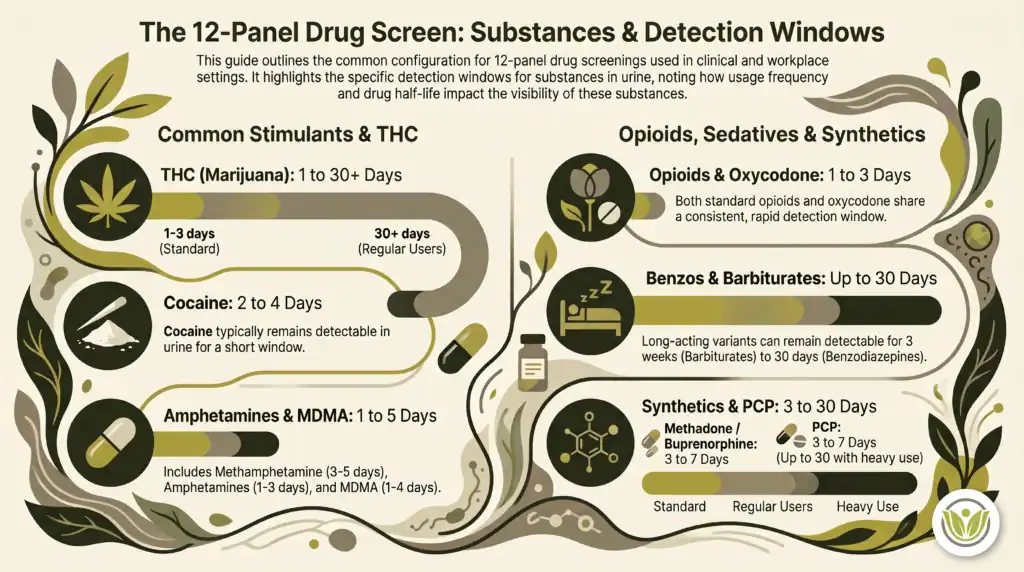



















An intervention is a planned, structured conversation that invites someone struggling with addiction to accept help, ideally before a crisis forces the decision.
Families who prepare well and lead with care instead of confrontation see better results, plus knowing the real next steps can turn helplessness into action.
What Is an Intervention, and Does It Actually Work?
An intervention is not a surprise ambush or a room full of accusations. At its best, it is a planned, caring conversation where the people closest to someone struggling with addiction share specific concerns and offer a clear path forward to treatment.
Research on family-based approaches consistently shows that people are more likely to accept help when loved ones offer encouragement and positive reinforcement rather than confrontation [1].
Interventions do not guarantee change, but they can be the moment someone finally hears how much their addiction has affected the people who love them most.
How Does the Family System Affect Addiction and Recovery?
Addiction rarely develops in isolation, and it rarely gets better in isolation either. Family systems theory holds that when one person struggles with substance use, the whole family adapts around it, often without realizing it, through covering for missed responsibilities, walking on eggshells, or avoiding conflict altogether [1].
Those same patterns can shift once a family changes how it responds. When loved ones move from managing crises to reinforcing healthy choices, the person struggling is more likely to seek and stay in treatment. This is also why family involvement, not just individual treatment, tends to produce better long-term outcomes.
How Do You Know When It Is Time to Step In?
Waiting for someone to hit rock bottom is not a strategy; it is a delay. Warning signs worth acting on include:
- Missed work or family obligations
- Health scares tied to substance use
- Legal trouble
- Financial strain
- A pattern of broken promises to get help
You do not need a perfect moment or complete certainty. If your gut has been telling you something is wrong for weeks or months, that is usually reason enough to start preparing.
How Do You Plan an Intervention for a Loved One?
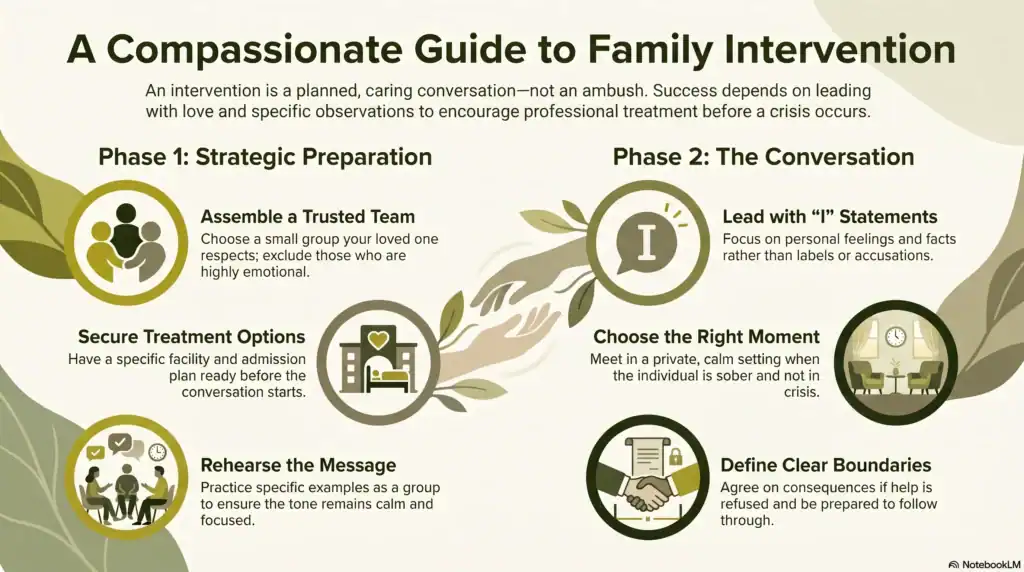
A good intervention is built in advance, not improvised in the heat of the moment. Before you sit down with your loved one, work through the following:
- Choose a small group of people your loved one trusts and respects, not everyone who has an opinion.
- Pick a private, calm setting and a time when your loved one is sober and not in crisis.
- Agree on what everyone will say in advance, using specific examples rather than vague complaints.
- Have a treatment option already lined up, including where they can go and how soon they can be admitted [2].
- Decide together what happens next if your loved one says yes, and what boundaries you will hold if they say no.
- Leave out anyone who is currently using substances, is extremely emotional, or is likely to turn the conversation into a fight.
Rehearsing with the group beforehand keeps emotions from taking over the actual conversation.
What Should You Say During an Intervention?
Tone matters more than most families expect. Lead with love and specific observations rather than blame:
- Say what you have seen and felt, such as “I am scared because I found empty bottles in your car.”
- Stick to facts and your own experience instead of labels or diagnoses.
- Let your loved one respond without interrupting, even if what they say is hard to hear.
- Avoid ultimatums you are not prepared to keep.
Leave out shaming language, comparisons to other family members, and old arguments unrelated to the addiction. The goal is for your loved one to feel safe and to be confronted with facts, not attacked.
What Happens if Your Loved One Refuses Help?
Not every intervention ends with an immediate yes, and that does not mean it failed. Plant the seed, restate that the offer of help stands, and follow through on any boundaries you set, such as no longer covering for missed responsibilities or providing money that enables continued use.
Many people need to hear the message more than once before they are ready. Staying consistent, rather than escalating or giving up, keeps the door open for the next opportunity, and it is often the families who hold steady who see change eventually take hold.
How Do You Find the Right Treatment Center?
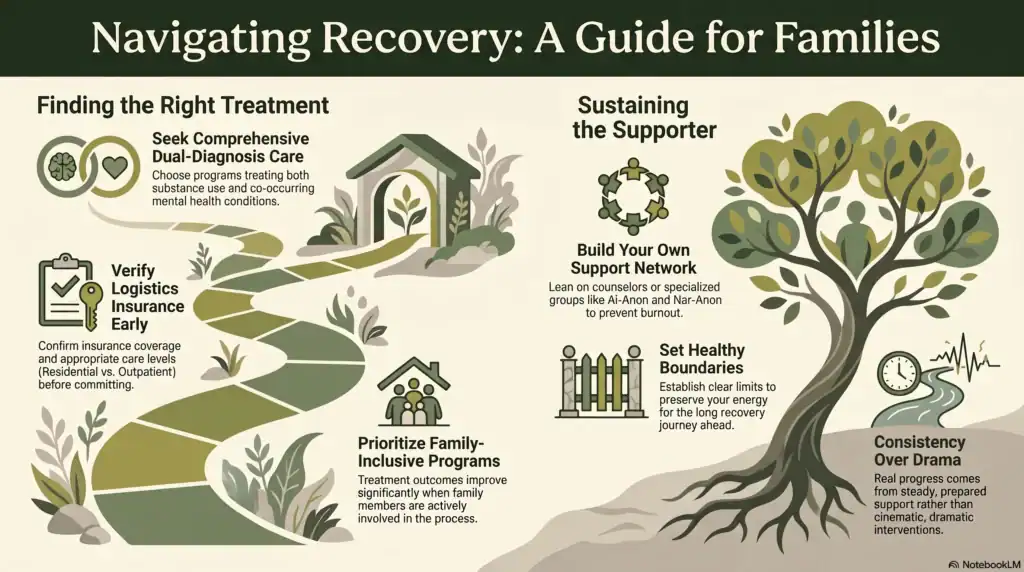
Once your loved one is willing, speed and fit both matter, since momentum can fade fast. Look for a program that treats the specific substance involved, offers medical detox if needed, and addresses any co-occurring mental health conditions rather than treating addiction as a standalone issue.
Ask about levels of care, since some people need residential treatment first, while others can start in an outpatient program, and confirm what insurance covers before committing to a facility.
Also ask directly about family involvement in treatment, since programs that include the people closest to the patient tend to see better outcomes [1].
If you are not sure where to start, SAMHSA’s National Helpline can point you toward vetted options in your area [3].
How Do You Take Care of Yourself While Helping Someone You Love?
Supporting someone through addiction is exhausting, and burning out helps no one. Lean on your own support system, whether that is friends, a counselor, or a group built for families, such as Al-Anon or Nar-Anon [2].
Set boundaries around what you will and will not do, and remind yourself that you did not cause the addiction and cannot cure it alone. Taking care of yourself is not selfish. It is what allows you to keep showing up for the long recovery ahead, and it models the kind of steady, healthy behavior you hope your loved one will find again.
Helping someone with addiction rarely resembles the dramatic moment people picture in movies. It means showing up prepared, staying consistent, and refusing to give up even when progress is slow.
Addiction Treatment and Family Support with Locations in Texas, Oregon, Nevada, and Arizona
Virtue Recovery Center offers detox, residential, PHP, IOP, and outpatient care across Arizona, Texas, Nevada, and Oregon, so your loved one can start at whatever level of care they actually need. We treat co-occurring mental health conditions alongside substance use, and we involve families in the process rather than leaving you outside the door.
Have a place ready before you sit down for an intervention. Our admissions team can verify your insurance and coordinate a direct admission, so when your loved one says yes, you can all begin healing that same day.
Sources
| [1] | Substance Abuse and Mental Health Services Administration. (2020). Chapter 3, Family counseling approaches. In Substance use disorder treatment and family therapy (Treatment Improvement Protocol Series, No. 39). |
| [2] | National Institute on Aging. (2022). How to help someone you know who drinks too much. National Institutes of Health. |
| [3] | Substance Abuse and Mental Health Services Administration. (n.d.). National helpline. |