Recovery is just a phone call away. Our support team is available around the clock to assist you. Call (866) 461-3339.





Compulsive Overeating Disorder Treatment in Las Vegas, Nevada
⭐️⭐️⭐️⭐️⭐️
4.8/5 on Google from 900+ reviews
Joint Commission Accredited · Eating Disorder + SUD Specialists



Get Instant Insurance Verification

Your information is private and secure. No pressure to commit.
ACCEPTED INSURANCE















+ most major PPOs

Haley thibodeaux

Virtue Recovery changed my life. From day one, the staff made me feel truly cared for and supported—something I hadn’t felt in a long time. They weren’t just doing a job; they genuinely loved and believed in me.
Gina was especially amazing—her kindness, strength, and sincerity helped carry me through. She made me feel seen and valued every single day.
I’ve never felt more loved or understood in a place like this. Thank you, Virtue Recovery—you’ll always have a special place in my heart.
And Liz I’ll miss you

Ashley Mc
This place may have saved my life. The staff are exceptional along with the community!
I truly gained so much knowledge and insight to what I need to like life as my best self. All of the therapist are top notch as well! I feel I lucked out by choosing this center. If you are on the fence, not hesitate. This place is amazing.

Charles Cl
If youre looking for a place to recover, please do not hesitate to call this place. Ive been shown nothing but love the second I walked through the door. Food is amazing, they provide you with 10 cigs a day, you have full access to your phone after detox (except during groups & meetings ofc), they take us on outings every weekend, all the staff are beyond helpful and caring including the therapists. They really set the standard for what a rehab should be. Great job Virtue, yall are awesome!

Ashly Riddle
I can not say enough on how Virtue has saved me from myself in my addiction to alcohol! My whole life has changed for the better! Everybody here has been so supportive and caring! My counselor was Felix! He is such an amazing counselor! You’d be lucky to get him or anyone here. They are all awesome! Kenya the chef and her crew make the best meals! You will be fed well!
If I can give some advice! Do the work. Put it in! It will be so worth it 👌 I am proud to say that I am now 178 days sober! An accomplishment i could have not done on my own! Thank you Virtue!

Donald Winters
my stay here has been truly amazing. I learned so much about myself. My self esteem has gone up considerably. I want to give special thanks to all the people who work at Virtue and especially my case workers Miss Kerry and Gillian they have gone beyond my highest expectations. Thank you to everyone at Virtue for giving me a new life!

Sarah Small
Absolutely one of the best treatment facility I have been too. I was always greeted with a smile and positive attitude from staff and my peers. I really was so lost when I got here and not feeling like I knew who I was…. but they helped me find myself and I love who I am today.
Thank you to all the staff and my friends I have made along the way.
I’m glad I choose to come here.

Dedrick Freeman
Experience at Virtue was amazing. Beyond thankful for the staff. Most are in recovery which makes a huge difference. All treat you amazingly and make you feel as comfortable as you can be in rehab. Ms. Naiomi is amazing Mr. Charles and Mr. Felix are awesome. Very thankful for this experience. My second rehab now hopefully the last but this experience has definitely been the best. Thank You Virtue.

Mark Knof
Virtue center is a great place for recovery. I worked my third time coming from street drugs and it was the most success in life thanks to hardworking staff here. i was treated well from start until I went home. The food was really great. Thank you for the kind nurses specially Eric in particular. He helped me through darkest moments in my detox, I will never forget this place and tell everyone that need real help to look nowhere else but Virtue center

Jennifer Crane
I have been to a lot of detoxes throughout my life… This place was awesome.. From the time I walked in, they were very compassionate nd the week I was there they really helped me Work on my mental health and making sure when I left, I had resources.. The communication was awesome, and it still is… This place made such an impression on me.I hope to soon work at a detox.. Thank you Virtue Recovery

Marten Jameel
I had an excellent experience at Virtue Recovery. The staff showed the highest level of care, compassion, and professionalism throughout my time there. I felt fully supported in every step of the process, and their dedication truly stands out. I would highly recommend Virtue Recovery to anyone seeking quality treatment and support.
Are you or someone you love battling compulsive overeating? Our luxury Las Vegas location and outpatient facility provide compassionate care and expert treatment to help you reclaim your health.
Call 866-461-3339 or verify your insurance to get started today.
We Work with Most Insurance Providers
Virtue Recovery Center treatment centers work closely with most major insurance companies across the U.S. Our financial services staff will work with you and your insurance company to determine a financial plan to make treatment possible. Many insurance providers have deemed Virtue Recovery Center treatment centers “centers of excellence.” Virtue Recovery treatment centers are proud to be recognized by multiple insurance providers for our leadership, best practices, research, support, and training in the eating disorder treatment field. Accepted plans include Cigna, Humana, Magellan, MultiPlan, TriWest, Aetna, Anthem, and more. Verify your insurance here.
Our Accreditations
- The Joint Commission
- National Association of Addiction Treatment Providers (NAATP)
- Better Business Bureau Accredited
What is Compulsive Overeating Disorder?
Compulsive overeating is a type of eating disorder where a person feels unable to stop eating large amounts of food, even when they’re not hungry. People with compulsive overeating often feel out of control when they eat and may use food as a way to cope with difficult emotions, stress, or anxiety. Unlike other eating disorders, compulsive overeating doesn’t involve purging, but it can still lead to weight gain, health problems, and emotional distress.
This behavior can become a cycle that’s hard to break without help. After overeating, feelings of guilt or shame often follow, which may lead to more overeating. It’s important to know that compulsive overeating is not a matter of willpower; it’s a real disorder that requires professional treatment. With the right support and guidance, you can regain control over your eating habits and improve your overall well-being.
Individual Counseling for Compulsive Overeating Disorder
Individual counseling is an important part of treating compulsive overeating. In these one-on-one sessions, you’ll work with a therapist to explore the emotional and psychological reasons behind your overeating. Many people with compulsive overeating use food as a way to cope with stress, sadness, or other difficult emotions. Your therapist will help you understand these patterns and find healthier ways to manage your emotions without turning to food. The treatment modalities usually used for overeating disorder treatment include cognitive behavioral therapy (CBT), dialectical behavioral therapy (DBT), and motivational interviewing (MI) therapy.
Over time, you’ll develop new strategies to control your eating and build a better relationship with food. You’ll learn how to identify triggers that lead to overeating and work on ways to break the cycle. Individual counseling allows you to openly discuss your struggles in a safe and supportive environment. These personalized sessions help you overcome compulsive overeating and create lasting, positive changes in your life.
What Treatment Options Are Available for Compulsive Overeating?
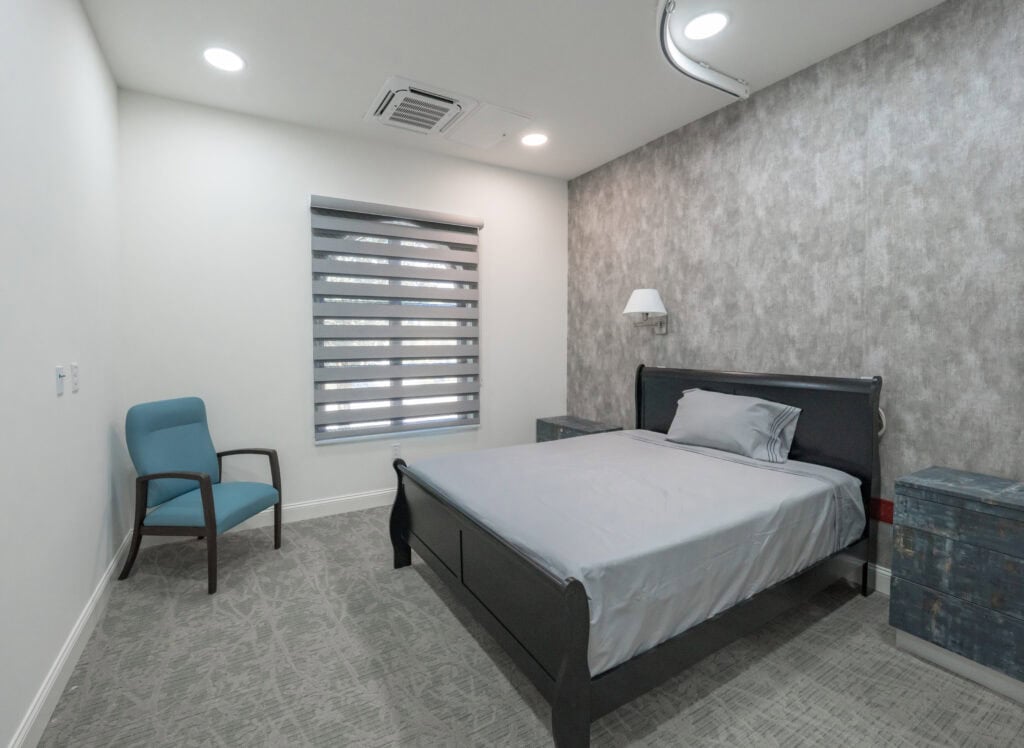
Our luxury Las Vegas residential treatment program offers a comfortable, supportive environment for those struggling with compulsive overeating. In residential treatment, you’ll live at our facility, receiving 24/7 care from a team of professionals who specialize in eating disorders. With a structured routine that includes therapy, nutritional counseling, and group support, you’ll have the opportunity to focus entirely on your recovery without the distractions of everyday life.
Our Las Vegas facility provides a calming and private setting that encourages healing. You’ll participate in various therapeutic activities to help you regain control over your eating habits. Residential treatment not only provides you with the tools to manage compulsive overeating, but it also helps you build a strong foundation for long-term success. You’ll leave with the skills you need to maintain a healthier relationship with food and continue your journey to recovery.
Family Style Treatment for Compulsive Overeating Disorder
Family support is a key part of recovery from compulsive overeating. Our family-style treatment approach involves your loved ones in the recovery process, helping them understand your eating disorder and how they can best support you. In family therapy sessions, we focus on improving communication and building a supportive home environment that encourages healthier eating habits. This helps your family play an active role in your healing.
Family therapy isn’t just for you — it’s also for your loved ones. It gives your family the tools they need to understand the emotional and psychological aspects of compulsive overeating. Together, you’ll work on creating a strong support system that can continue to help you after treatment ends. With everyone on the same page, family-style treatment helps you feel more supported, understood, and prepared for long-term success.
Trauma-Informed Care for Compulsive Overeating Disorder
For many people, trauma plays a significant role in the development of compulsive overeating. Our trauma-informed care approach addresses the deep emotional wounds that may be linked to your eating disorder. In trauma-informed care, we ensure that your treatment is compassionate to your experiences, creating a safe space where you can begin to heal. We help you explore how past trauma may have contributed to your relationship with food and guide you through the healing process.
Trauma-informed care addresses your eating behaviors and focuses on your emotional well-being. By understanding and working through trauma, you’ll learn healthier ways to cope with difficult emotions and reduce the need to turn to food for comfort. This approach helps you break free from the emotional triggers that fuel compulsive overeating, providing you with the tools to heal both physically and emotionally.
General Eating Disorder Statistics
- An estimated 9% of the U.S. population, or 28.8 million Americans, will have an eating disorder in their lifetime.
- 15% of women will suffer from an eating disorder by their 40s or 50s, but only 27% receive any treatment for it.
- Fewer than 6% of people with eating disorders are medically diagnosed as “underweight.” People in larger bodies are at the highest risk of having developed an eating disorder in their lives, and among people in larger bodies, the higher the BMI, the higher the risk.
- In a sample from an American emergency room, 16% of adult patients screened positive for an eating disorder.
- Anorexia nervosa has the highest case mortality rate and second-highest crude mortality rate of any mental illness.
- 10,200 deaths each year are the direct result of an eating disorder — that’s one death every 52 minutes.
- Eating disorder sufferers with the highest symptom severity are 11 times more likely to attempt suicide than their peers without eating disorder symptoms, and even those with sub-threshold symptoms are 2 times more likely.
- The economic cost of eating disorders is $64.7 billion every year.
- Over 3.3 million healthy life years worldwide are lost yearly because of eating disorders.
- Eating disorder claims in the United States rose 65% as a percentage of all medical claims from 2018 to 2022.
- The proportion of people with eating disorders who were hospitalized doubled during the COVID-19 pandemic.
- Over 70% of people with eating disorders also have other conditions, most commonly anxiety and mood disorders.
- Only 1 in 10 individuals with an eating disorder receive treatment.
What Is Compulsive Overeating and How Is It Different From Binge Eating?
What are the signs of compulsive overeating? Signs include eating large amounts of food quickly, eating when not hungry, and feeling out of control when eating.
How is compulsive overeating different from binge eating? Compulsive overeating doesn’t always involve planned binge episodes, but both include eating past the point of fullness and feeling a loss of control.
Is compulsive overeating related to emotional issues? Yes, many people overeat to cope with emotions like stress, sadness, or anxiety.
Can compulsive overeating cause health problems? Yes, it can lead to weight gain, diabetes, heart problems, and other serious health issues if not treated.
How is compulsive overeating treated? Treatment includes therapy, nutritional counseling, and learning healthier ways to cope with emotions.
Can I overcome compulsive overeating on my own? While self-awareness is helpful, professional treatment is often necessary to address the underlying emotional and psychological issues.
How does therapy help with compulsive overeating? Therapy helps you explore the reasons behind your overeating and teaches you healthier ways to manage emotions.
What role does nutrition play in treatment? Nutritional counseling helps you learn healthy eating habits and understand how to nourish your body properly.
Is residential treatment necessary for compulsive overeating? Residential treatment is recommended for severe cases requiring more intensive, round-the-clock care.
How can my family support my recovery? Family therapy helps educate your loved ones about compulsive overeating and teaches them how to provide positive support.
What causes compulsive overeating? It can be caused by emotional stress, trauma, low self-esteem, or negative body image, among other factors.
How long does treatment for compulsive overeating take? The length of treatment varies based on individual needs, but recovery is a gradual process that can take months or longer.
What is trauma-informed care? Trauma-informed care is an approach that recognizes the role past trauma plays in compulsive overeating and helps you heal in a safe, compassionate environment.
Can compulsive overeating affect children and teens? Yes, compulsive overeating can affect people of all ages, including children and teens.
How do I start treatment for compulsive overeating? The first step is reaching out to a healthcare provider or treatment center to discuss your symptoms and create a personalized treatment plan. Call 866-461-3339 or get a free assessment here.
Find Hope at Virtue Recovery Center
The staff at Virtue Recovery Center looks forward to helping you and your loved ones on the road to recovery. Get in touch with us today to learn more about our facilities located throughout the United States. Call 866-461-3339 or verify your insurance here.
Glossary of Key Terms in Compulsive Overeating Disorder Treatment
Compulsive Overeating — Compulsive overeating refers to eating large amounts of food repeatedly, often in response to stress, emotions, or habit. Unlike occasional overeating, it becomes a chronic behavior that feels out of control.
Food Cravings — Cravings are strong, often irresistible urges to eat specific foods, commonly those high in sugar, fat, or salt. In compulsive overeating, cravings can override hunger and fullness cues.
Emotional Eating — Emotional eating means using food to cope with feelings such as sadness, anxiety, or boredom. While common, it can turn into a harmful cycle when used as the primary way to manage emotions.
Binge Eating vs. Compulsive Overeating — Binge eating disorder involves distinct episodes of eating very large amounts of food in a short period, often followed by distress. Compulsive overeating may occur more steadily over time, without the same rapid binge episodes.
Satiety Signals — Satiety signals are the body’s natural indicators of fullness. People with compulsive overeating often ignore or lose touch with these signals, which contributes to continued overeating.
Cognitive Behavioral Therapy (CBT) — CBT is a therapeutic approach that helps individuals recognize negative thought patterns and replace them with healthier behaviors. It is one of the most effective treatments for compulsive overeating.
Nutritional Counseling — Nutritional counseling involves working with a registered dietitian to rebuild balanced eating habits. For compulsive overeating, this may include meal planning, portion awareness, and developing a healthier relationship with food.
Co-Occurring Disorders — Compulsive overeating often occurs alongside depression, anxiety, or substance use disorders. Treating these conditions together is essential for lasting recovery.
Weight Cycling — Weight cycling, also known as “yo-yo dieting,” occurs when people repeatedly lose and regain weight due to dieting and overeating. It can worsen both physical health and emotional wellbeing.
Relapse Prevention — Relapse prevention teaches strategies to manage triggers, reduce stress, and maintain recovery progress. It helps clients build resilience against setbacks and create a long-term plan for wellness.
Virtue Recovery’s Eating Disorder Treatments
- Anorexia Nervosa — Evidence-based treatment to restore health and overcome restrictive eating and body image struggles.
- Bulimia Nervosa — Compassionate care to break the cycle of bingeing, purging, and harmful eating behaviors.
- Orthorexia Nervosa — Specialized treatment to heal the obsession with “clean” or “pure” eating.
- Binge Eating — Comprehensive therapy to address compulsive overeating and build a healthier relationship with food.
- Compulsive Overeating — Supportive programs to reduce emotional overeating and promote long-term recovery.
- Rumination Disorder — Targeted treatment for chronic regurgitation and re-chewing behaviors.
- OSFED — Personalized care for complex eating disorder symptoms that don’t fit one category.
- ARFID — Treatment designed to help overcome restrictive eating and food avoidance.
- UFED — Compassionate support for eating disorder symptoms that don’t meet specific diagnostic criteria.
- Laxative Abuse — Safe, effective treatment for laxative misuse and its physical and emotional consequences.
- Diabulimia — Integrated care for individuals with Type 1 diabetes who struggle with insulin restriction and eating disorder behaviors.
- Body Dysmorphia — Holistic treatment to address obsessive thoughts and behaviors about perceived physical flaws.
Virtue Recovery’s Therapy Treatments
- Cognitive Behavioral Therapy (CBT) — CBT helps clients identify and change negative thought patterns and behaviors that fuel addiction or eating disorders, replacing them with healthier coping strategies.
- Dialectical Behavioral Therapy (DBT) — DBT teaches emotional regulation, distress tolerance, and mindfulness skills, supporting recovery for individuals struggling with substance use and eating disorders.
- Motivational Interviewing (MI) — MI is a client-centered approach that helps individuals explore and strengthen their own motivation for positive change, making it a powerful tool in eating disorder and addiction recovery.
- Psychoeducation Group Therapy — These groups provide education on addiction, mental health, and recovery strategies, empowering clients with the knowledge and tools they need to maintain long-term wellness.
- Process Group Therapy — In process groups, clients share experiences and gain support while exploring emotions and behaviors in a safe, therapeutic environment that fosters healing and connection.
- Meditation Therapy — Meditation promotes relaxation, stress reduction, and emotional balance, helping clients manage cravings, anxiety, and triggers throughout recovery.
- Music Therapy — Music therapy uses rhythm, lyrics, and sound to promote self-expression, reduce stress, and support emotional healing in addiction and eating disorder recovery.
- Yoga Therapy — Yoga integrates breathwork, movement, and mindfulness to strengthen the mind-body connection, reduce stress, and support physical and emotional recovery.
- Art Therapy — Through creative expression, art therapy allows clients to process complex emotions, reduce anxiety, and explore nonverbal ways of healing during treatment.
- Family Therapy — Family therapy helps rebuild trust, improve communication, and engage loved ones in the recovery process.
- Therapy & Counseling — Counseling provides a safe, supportive space to address the root causes of addiction and eating disorders through personalized, evidence-based therapy.
- Relapse Prevention Therapy — This therapy teaches clients how to recognize triggers, manage cravings, and maintain long-term recovery from addiction and eating disorders.
- 12-Step Group Therapy — Rooted in the proven 12-Step model, these groups provide structure, accountability, and peer support to guide clients toward long-term sobriety.
Get Instant Insurance Verification

Your information is private and secure. No pressure to commit.
We Are a Recovery Community Where People Rebuild Their Lives With Dignity
Clinical excellence, trauma-informed care, and a team that stays with you — from your first call to long after discharge. You will not forget how this place made you feel.