























Key Takeaways
-
Veterans Day began as Armistice Day in 1918 to commemorate the end of World War I and evolved in 1954 to honor all American Veterans.
-
Addiction and mental health challenges are longstanding issues many Veterans face after service, often linked to trauma, pain, and reintegration stress.
-
The Vietnam War era exposed the depth of Veteran addiction struggles, leading to the creation of modern rehabilitation and mental health programs.
-
Today’s Veterans Day observances increasingly emphasize recovery and awareness, highlighting addiction, suicide prevention, and emotional healing.
-
True honor extends beyond gratitude—it includes supporting Veterans’ ongoing recovery, ensuring they find lasting peace beyond the battlefield.
A Day Born From Peace, Rooted in Sacrifice
Veterans Day began not as the celebration we know today, but as a solemn remembrance. When World War I ended on the eleventh hour of the eleventh day of the eleventh month in 1918, the world paused—literally—to honor peace. Armistice Day, as it was first called, marked the moment global warfare ceased and millions of soldiers could finally return home.
In 1954, following World War II and the Korean War, the United States officially renamed it Veterans Day to honor all American service members who served—living or deceased—in any conflict. It became less about a single war and more about a collective recognition of sacrifice, resilience, and the enduring struggle many Veterans continue to face long after the uniform is folded away.
The Unseen Battle: Addiction and the Cost of Service
Behind the parades and speeches, another fight has been part of the Veterans Day story for decades – one that doesn’t make headlines or medals: addiction.
Coming home from combat doesn’t always mean peace. Many Veterans return home with invisible wounds – Post-Traumatic Stress Disorder, anxiety, depression, chronic pain, which can manifest in substance use. Alcohol, prescription drugs, or illicit drugs are often coping mechanisms for untreated or misunderstood trauma.
By the 1970s, after the Vietnam War, public awareness of addiction among Veterans began to emerge in a big way. Thousands of returning soldiers struggled with heroin use, with post-traumatic stress disorder (a term not yet officially recognized), and with social isolation. It was this time that began to change the way America viewed mental health and addiction in the Veteran community.
The government and advocacy groups started to develop special programs, many of which formed the basis for the rehabilitation centers of today’s VA. These efforts were a direct response to the growing realization that the war doesn’t always end when the uniform comes off.
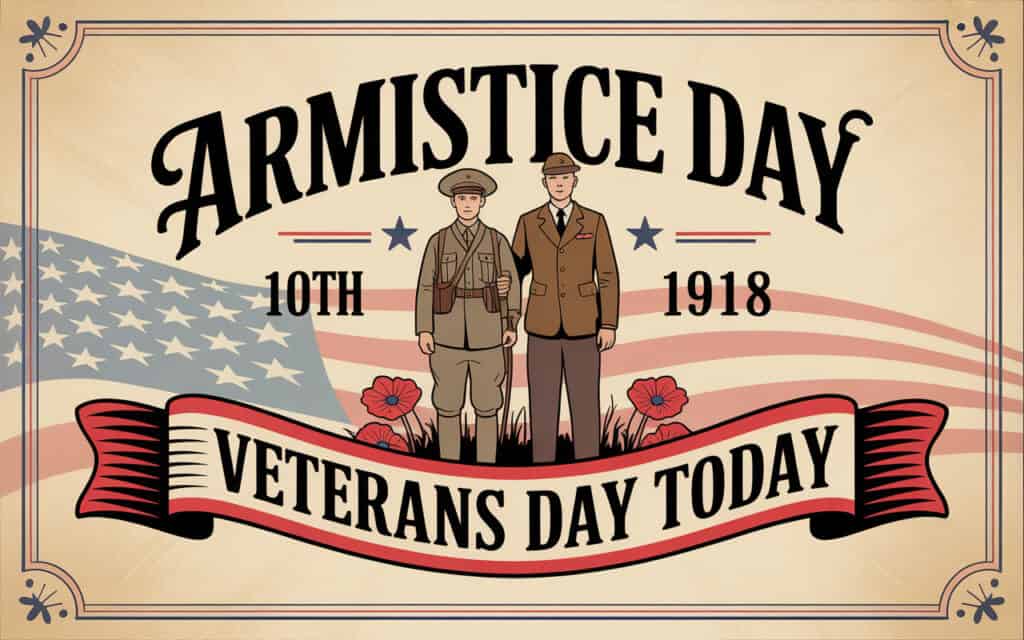
Illustration with two men in military and civilian attire, an American flag background, and text reading Armistice Day 10th 1918, Veterans Day Today. Vintage design with patriotic elements.
Addiction Awareness: A Continuing Theme of Veterans Day
Every Veterans Day since, awareness around addiction and mental health has quietly, yet persistently, been a recurring theme. From nonprofit outreach events to public service campaigns, the message has evolved: honoring Veterans means more than saying thank you for your service—it means fighting for their recovery, too.
In recent years, this awareness has taken center stage:
-
Community walks and memorial events now spotlight Veteran suicide prevention and substance use recovery.
-
Treatment facilities and recovery centers host Veterans Day open houses and educational campaigns that encourage families to recognize the signs of trauma and addiction early.
-
Public figures and Veterans themselves have begun to share their recovery journeys, reframing addiction as an extension of service-related injury rather than moral failing.
These conversations aren’t just about statistics—they’re about connection, empathy, and breaking stigma.
From Battlefields to Healing Fields
Today, Veterans Day is as much about healing as it is about honor. Addiction awareness has become an integral part of that healing process. It bridges the gap between military service and civilian life, reminding us that the strength of our Veterans isn’t defined by what broke them, but their courage to seek help and rebuild.
In many communities, Veterans Day has come to include panels on mental health treatment, recovery resources, and peer support programs. The goal is simple yet profound: no Veteran should ever have to fight their battles alone—in war or in recovery.
A Modern Call to Action
As America continues to evolve in its understanding of trauma and addiction, Veterans Day is a national reminder: Thank you for your service needs to mean we’re here for your healing.
The greatest tribute we can pay to our Veterans is not merely remembering them, but doing something about it. Supporting addiction awareness programs, funding recovery initiatives, and taking the time to have conversations about mental health are all ways we can ensure that Veterans can find peace to last beyond the battlefield.
Resources
-
U.S. Department of Veterans Affairs (VA) – Veterans Day History
-
Offers an official overview of how Veterans Day began, its evolution from Armistice Day, and its national significance.
-
National Institute on Drug Abuse (NIDA) – Substance Use and Military Life
-
https://nida.nih.gov/publications/research-reports/substance-use-in-military-life
-
Provides data and research on addiction, PTSD, and substance misuse among military personnel and Veterans.
-
-
U.S. Department of Veterans Affairs – Mental Health and Substance Use Disorder Programs
-
Details the VA’s national programs, treatment options, and recovery resources for Veterans struggling with addiction.