
- Treatment
- Substance Abuse
- Mental Health Treatment
- Eating Disorders
- Anorexia Nervosa Treatment in Las Vegas, Nevada
- Bulimia Nervosa Treatment in Las Vegas, Nevada
- Orthorexia Nervosa
- Binge Eating Disorder Treatment in Las Vegas, Nevada
- Compulsive Overeating
- Rumination Disorder
- OSFED
- ARFID
- UFED
- Laxative Abuse
- Diabulimia
- Body Dysmorphia
- Eating Disorder Treatment Modalities at Virtue Recovery Center
- Eating Disorder Frequently Asked Questions
- Teen Rehab

























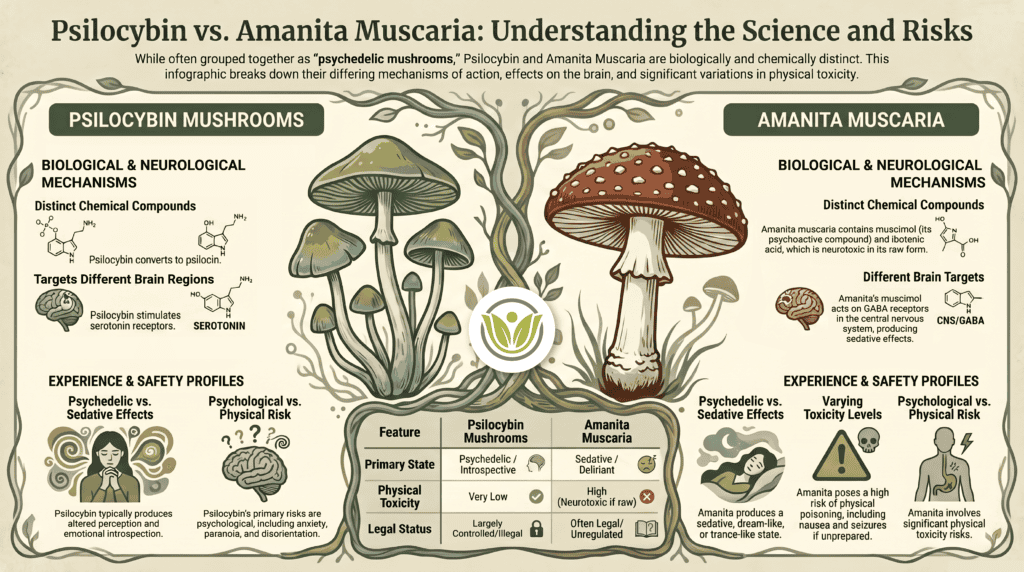
Neither psilocybin mushrooms nor Amanita Muscaria is physically addictive, but psychological dependency can develop. Misuse increases risks, including:
- Psilocybin Mushrooms: Anxiety, paranoia, or prolonged “bad trips”
- Amanita Muscaria: Nausea, confusion, and potential toxicity if consumed raw
Long-term misuse of either substance may disrupt mental health, emphasizing the need for professional guidance in managing substance use.
Understanding the differences between psilocybin mushrooms and Amanita Muscaria is essential for safe and informed decisions. While both have fascinating properties, their risks and effects demand caution and responsibility.
If you or someone you know struggles with substance use, help is available. Get your Free Assessment today and begin your journey toward healing and wellness.
Key Takeaways
- Psilocybin and Amanita Muscaria are distinct psychoactive fungi with different chemical compositions and effects.
- Psilocybin interacts with serotonin receptors, while Amanita Muscaria affects the central nervous system.
- Both have potential risks and benefits, requiring proper understanding and caution.
Seeking Help for Psychedelic Misuse
Recovery from misuse involves a combination of detoxification, therapy, and support. A tailored treatment plan may include:
- Individual counseling to address the root causes of misuse.
- Group therapy for shared experiences and support.
- Medical supervision during detox is necessary to manage withdrawal symptoms.
At Virtue Recovery Center, specialists provide comprehensive care to help individuals regain control of their lives and achieve lasting recovery. Virtue Recovery is in-network with many insurance providers, which may cover the cost of your cocaine addiction treatment.
Contact our admissions team to verify if your insurance covers treatment at Virtue Recovery. Struggling with mushroom addiction? Contact us now for immediate help with free 24/7 live phone support.
Frequently Asked Questions
What is the main chemical difference?
Psilocybin mushrooms contain psilocybin, which converts to psilocin in your body—a classic psychedelic that acts on serotonin receptors. Amanita muscaria contains muscimol and ibotenic acid, which act on GABA receptors, producing a sedative, deliriant, or “dream-like” state instead of a typical psychedelic trip.
Do they produce the same kind of “trip”?
No. Psilocybin often causes visual distortions, euphoria, spiritual insights, and ego dissolution. Amanita muscaria is not a classic psychedelic; its effects include drowsiness, confusion, sensory distortion (size perception changes), muscle twitches, and vivid, often bizarre dreams—sometimes unpleasant or disorienting.
Which one is poisonous?
Amanita muscaria is considered toxic if unprepared. It contains ibotenic acid, a neurotoxin that causes nausea, vomiting, and delirium. Proper drying or boiling converts ibotenic acid to safer muscimol, but risks remain. Psilocybin mushrooms are not toxic to vital organs but can cause psychological distress or panic.
Are both legal in the same places?
Generally, no. Psilocybin is a controlled substance in most countries, with exceptions (e.g., Oregon, Colorado, Canada for medical use). Amanita muscaria is legal in many places (except Louisiana, Australia, etc.) because it’s not a classic psychedelic, though laws change. Always check local regulations.
Can you cook or prepare them similarly?
Psilocybin mushrooms degrade with high heat; they’re often dried or made into tea. Amanita muscaria must be parboiled or dried at specific temperatures to convert toxic ibotenic acid into muscimol. Eating raw Amanita causes severe poisoning. Preparation methods are entirely different and not interchangeable.
Which is used more in spiritual or shamanic practices?
Historically, both were used. Psilocybin is famous in Mesoamerican rituals. Amanita muscaria appears in Siberian shamanism. Today, psilocybin is far more common for therapeutic and spiritual use due to its predictable, less toxic profile and clearer psychological effects.
How long do the effects last?
Psilocybin effects last 4–6 hours (or up to 8 for high doses). Amanita muscaria effects begin within 30–120 minutes and can last 6–10 hours, with a sedation phase followed by disorientation or “dreamy” confusion. Recovery can be longer and often includes amnesia or lingering fatigue.
Which is more dangerous for a beginner?
Amanita muscaria is generally more dangerous. Dosing is unpredictable, effects can be unpleasant or frightening, and poisoning (nausea, seizures, and coma) is possible if underprepared. Psilocybin carries psychological risks such as anxiety or panic, but its physical toxicity is extremely low for most healthy adults.
Sources
[1] Andrade F. et al., 2025. Therapeutic Use of Psilocybin in Depression: a Systematic Review of Clinical Evidence. Acta Neuropsychiatr. 2025 Sep 3;37:e86.
[2] Stoeva-Grigorova S, et al. 2025. Acute Amanita muscaria Toxicity: A Literature Review and Two Case Reports in Elderly Spouses Following Home Preparation. Toxins (Basel). 2025 Nov 25;17(12):570.
[3] Savickaitė E, Laubner-Sakalauskienė G. 2025. Emerging Risks of Amanita Muscaria: Case Reports on Increasing Consumption and Health Risks. Acta Med Litu. 2025;32(1):182-189.
[4] Jahanabadi S, et al. 2023. Natural psychedelics in the treatment of depression; a review focusing on neurotransmitters. Fitoterapia. 2023 Sep;169:105620.